Posts

Showing posts with the label threads

Power BI Insights & Inspiration

Image
  Power BI Insights & Inspiration Unlock the true potential of your data with powerful Power BI techniques. Bringing Charts to Life with Conditional Formatting Want your visuals to speak louder ? Conditional Formatting lets you highlight trends and patterns—like rising or falling sales—by applying dynamic visual cues. It’s a game-changer for telling clear, data-driven stories. While it's easy to apply conditional formatting in tables using the Power BI formatting pane, charts don’t offer this feature directly. But don’t let that stop you—where there’s a challenge, there’s also a creative solution. With a bit of ingenuity, you can still bring this capability to life in your Power BI charts. ✨ Dive deeper and explore what's possible: Power BI Training with PCWorkshops   To learn more: https://pcworkshopslondon.co.uk/ms-power-bi.html

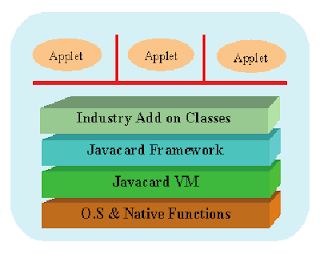
What is a Java Card Application?

Image
What is a Java Card Application? A Java Card application refers to software developed for  Java  Card technology, which allows  Java  applications to run on smart cards and other small-memory devices. These applications can perform various functions like authentication, secure transactions, and data storage, leveraging the security features and limited resources of smart cards. Java  Card development involves creating software applications specifically designed to run on  Java  Card technology-enabled smart cards and similar devices.  Developers use  Java  programming language and specific  Java  Card APIs (Application Programming Interfaces) to build applications that provide secure and portable functionality on these embedded systems.  Java  Card development typically involves tasks such as :  designing applets (small applications),  ensuring security measures are implemented,  optimizing performance ...

What is Java NIO (New Input/Output)

Image
What is  Java  NIO (New Input/Output)  Java NIO (New Input/Output) is a high-performance API introduced in JDK 4 that serves as an alternative to the standard Java I/O API.  It offers enhanced features for networking and file handling, providing a more efficient way to perform  Java   I/O operations compared to the traditional  Java  I/O system.  Unlike the   Java  java.io package, which includes classes for standard input and output operations, the java.nio package focuses on buffer classes used across the   Java   NIO APIs.  Java NIO represents a second-generation I/O system with advanced capabilities for handling  Java   I/O tasks. Java  Buffers :  In  Java  NIO, buffers are used to handle primitive data types efficiently.  This package is designed with a buffer-oriented approach, meaning data is written to and read from buffers, which are then processed...

The Seven Different Types of Coding Blocks in Java

Java   Coding Blocks    In Java , the term "coding block" typically refers to a block of code within certain constructs that define the scope and execution context of variables and statements. There are several types of coding blocks in Java, each serving different purposes. Here’s an overview: 1. Method Block A  Java  method block is the section of code within a method. It defines the scope of local variables and contains the statements that make up the method. public class MyClass { public void myMethod () { // Method block starts here int localVariable = 10 ; System.out.println(localVariable); // Method block ends here } } 2. Class Block A  Java  class block is the section of code within a class definition. It contains the class’s fields (variables), methods, and nested classes. public class MyClass { // Class block starts here int instanceVariable; // Field public void myMet...

What is a Package in Java

Image
What is a Package in Java In  Java   , a   Java   package is a mechanism used to group related  Java   classes, interfaces, and sub-packages together.  Java   Packages help in organizing your code, avoiding name conflicts, and controlling access to classes and members. Here’s a detailed look at Java packages: Key Concepts Purpose of  Java Packages : A  Java   package contains many classes.  A  Java   package is a collection of classes.  A class is a collection of methods. A class contains many methods.  Organization :  Java   Packages help in organizing code into logical groups. For instance,  Java    classes related to user interfaces might be placed in one  Java   package, while those related to database operations might be in another. Avoiding Name Conflicts : By placing  Java   classes in different  Java   packages, you avoid naming conflicts....

How big is an int in Java

Image
Integer Data types in  Java   // 8 bits // -128 to 127 0000 0001 b = -128; System.out.println("b " + b); b = 127; System.out.println("b " + b); // short integer  in Java // 00000000 00000000 short s = (short)b; // 16 bit // cast from a number datatype to another number datatype s = 500; b = (byte)s; System.out.println("b " + b); // int in  Java // 00000000 00000000 00000000 00000001 int i = (int)s ; // 32 bit ; binary integer 0 1 ; 00000000 8 bits= 1byte // long integer in  Java // 00000000 00000000 00000000 00000000 00000000 00000000 00000000 00000001 long l = (long)i; // 64-bit // float in  Java // single-precision 32-bit // 0 and manitissa of 23 bits and exponent of 8 bits // 0.01234567900123456789012 x 10*12345678 float f = 0.0f; // double in  Java double d = 3048575658.00 * 728348716381.00; // double-precision 64-bit d = (double) f; // cast float to double double-precision 64-bit

What is a Java Method

What is a  Java  Method 1. A  Java    method  is a block of  Java   code, it gives a block of code a name, and the code is “stored” under this name 2. The  Java   method (  Java  code) will not run all by itself. It will only run when it is called. 3.  Java   Methods are used to run the same code many times, without having to code it many times, or retyping the code over and over and over again. Define the code once, and use it many times! 4. You can pass data, known as parameters, into a  Java   method. The parameters are input values that the  Java  method needs in order to fulfil its task Example of a  Java  method:   void myMethod (double length * width) {  // length and width are parameters             double area = length * width;           S...

What is a Java enum

  Java Enums A    Java    enum  is a special  Java "class" that represents a group of  constants  (unchangeable variables, like  final  variables). A  Java  enum is for instance :  3 constant values e.g. Blue, Pink, Red  or e.g. the 12 months of the year  or the 7 days of the week etc.  Java   enums save you typing the values. One can get the value from the  Java   enum.  Java   enums avoid spelling errors and provide consistancy. To create:  enum Level { BAD , WORSE , TERRIBLE } To use:  Level myLevel = Level.BAD;

What is Java's Object-Oriented Programming (OOP)?

Image
What is  Java's    Object-Oriented Programming (OOP) Java's Object-Oriented Programming (OOP) is centered on objects rather than procedures, contrasting with procedural programming which focuses on manipulating data through functions.  Java's  OOP emphasizes creating objects that combine data and operations. Using object-oriented programming in Java offers several advantages: Improved Execution Speed:   Java's   OOP often executes faster compared to procedural code. Structured Programs:   Java's  OOP provides programs with a clear, modular organization. DRY Principle:   Java's  Object-oriented programming promotes reusability by consolidating common functionalities into reusable components, reducing code redundancy. Simplified Maintenance:   Java's  OOP enhances  Java  code maintenance, modification, and debugging through its modular structure and reusable elements. Enhanced Reusability:   Java's  ...

What is a web application? (Lesson 7 of our Java Bootcamp)

  What is a  Java  web application? (During Lesson 7 of our   Java    Bootcamp, we will cover this topic in depth and create such an app )  A  Java  web application (web app) is: ·          an  application program   ·          that is stored on a remote server ·          and delivered over the internet through a browser interface.  Examples of web applications are for instance: ·          webmail, ·          online calculators, ·          and e-commerce platforms. How web applications work: Java  web applications are accessed over a network.  That means, users don't need to download a web application.  Instead, they can conveniently access the  Java...

Who are the Dining Philosophers in JavaProgramming

Image
  Who are the Dining Philosophers in Java Programming?   Java multi-threading can be compared to the classic dining philosophers problem. Imagine five philosophers sitting around a dinner table, each wanting to eat spaghetti. To do so, each philosopher needs two forks, but there is only one fork between each pair of philosophers. A philosopher must wait until both adjacent forks are available before they can eat. Once a Java philosopher is done eating, they put down one or both forks. If each philosopher picks up one fork and waits for the second fork to become available, all five will end up holding one fork and waiting for the other. In this situation, each philosopher expects a neighbour to put down a fork, but since all are waiting and none put their fork down, everyone remains stuck. This situation, where all processes in Java programming are waiting indefinitely for each other to act, is known as a deadlock . 😊     Learn to code in   Java

Java is Very Popular and offers a High Salary

Image
  Java is Very Popular and offers a High Salary. J ava is one of the most popular programming languages globally, with around 9 million developers using it and running on approximately 7 billion devices worldwide, according to Oracle blogs. The high demand for   Java skills makes Java developers highly sought after, leading to some of the industry's most lucrative job opportunities. The average salary for a Java developer ranges from $47,169 to $106,610 per year. Java is also easy to learn. Those taking the Java evenings course will find the syntax straightforward and similar to English, allowing them to get started within just a few hours. Additionally, Java boasts a large programming community, which means course attendees will have ample support from experienced Java professionals when needed. Another significant advantage is   Java ’s abundant Application Programming Interface (API), which includes numerous   Java classes, packages, and interfaces....

Why attend a Java Bootcamp?

Image
  Why attend a Java Bootcamp? Compared to a degree, the Java Bootcamps is shorter, less costly, more practical and more focussed on just the one skill, Java Programming (although Java Programming includes multiple skills) and takes you from scratch to job-ready. It is a very effective way to put your head down, learn the Java Programming Language and move on in your career. Twelve weeks of dedicated learning and practicing thoroughly enhance   skills and broaden opportunities. What is a Java Bootcamp? A Java coding bootcamp is an intensive training program to master Java coding skills within 12 weeks. Skills learnt that are relevant immediately in the workplace as  Java  Coder. Project-based learning ensures that you become fluent in creating useful and effective  Java  code.   The biggest at advantage is the in-depth technical knowledge and practical skills. Who will benefit? The Java Bootcamps is an excellent opportunity fo...
Image
Free 1-hour Threads online seminar :  Coding on Threadsin Python Join us on the 24th June, for a free 1-hour lesson on threading:   Python Concurrency and Multi-Threading , Sat, Jun 24, 2023, 10:00 AM | Meetup Program: Step 1 : What is concurrency and threads Step 2: Create and implement therads Step 3: Synchronizing threads Step 4: Threads intercommunication Step 5: Tsting the applications  Concurrency means that multiple things are executed at the same time, i.e. concurretnly. In Python, concurrency can be achieved in a number of different ways: Firstle, there is  threading. This is simply  allowing multiple threads to take turns. Then there is  multiprocessing. This means that we are using  multiple processor cores, and is also parallelism. Using  asynchronous IO , means that a task is fired off while another is still continuing, instead of waiting for for all tasks to finish first. With distributed computing,  multiple computers are used ...